There’s always an Arquillian Battle Cruiser, or a Corillian Death Ray, or an intergalactic plague that is about to wipe out all life on this miserable little planet, and the only way these people can get on with their happy lives is that they DO NOT KNOW ABOUT IT!
Agent K from Men In Black
Might I echo in my opening the words of Father Joseph Damien: “My fellow lepers,”… Being in a work situation that is categorized as “essential”, I have had the mixed blessing of continuing to work while others are cloistered in their homes here in the Corona capital of the world, New York. From the suspicious glances of the people I pass on the street to the less than polite comments from store clerks, there is a troubling thing happening in the places I find myself… fear; and fear’s close cousins, panic and suspicion. We do well as Americans when we have a common enemy, it draws us together, and renews our national camaraderie; but when we have a “hidden enemy”, then we don’t know who we can trust… “They walk among us!”… might that one have the virus? or that one? We see potential threat invading our space, in our markets, on our streets. With our enemy hidden in the microscopic, the threat we can see, the threat we can point to and shun is our fellow citizen, and those we would one time have considered allies. People are often not smiling or speaking to each other, for fear another might feel encouraged to socialize. We are all beginning to understand the undeserved (but understandable) suspicion that Muslims and those of middle eastern descent felt in the aftermath of 9/11. We have become “lepers” to each other.
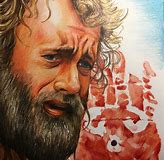
It is troubling to me that politicians, pundits, and news agencies, in their zeal to focus on the physical threat, have neglected to broaden their gaze to include the rest of life. Panic does that. It gives you tunnel vision. In that tunnel vision we often neglect to see the unintended consequence of our words and our tone. Psychologists, sociologists, economists, spiritual leaders need to be included in the public consideration and discussion of our response to this threat, lest, as President Trump is prone to warn, the cure becomes worse than the disease. Panic doth protest that nothing else matters if you die! But life is always risk, and life cannot only be the avoidance of death, we would not fly, we would not drive, we would not be near other people… we would perhaps not die, but neither would we live. The risk of death must always be balanced against the need to live, and we often err in both directions, but panic takes the decisions outside the realm of rationality, and into the tyranny of fear. Seldom are decisions born of fear alone anything but disastrous. In this current crisis, it is my concern that we have forgotten at once the lessons learned both of Y2K, and the Great Depression. Further, we in our laser focus on “social distancing” and isolation, are not giving due attention to just how much this goes against our biology and our humanity, and what the ramifications might be. Like so many other parts of creation, we are social creatures. We need to talk, to be with others, to touch, to hug, to hold, to kiss. That taken from us, and it sometimes is, will have an effect, the severity of which will be commensurate with the severity of the separation. “Social distancing” was an exceedingly unfortunate choice of terms for what should have been called “Physical distancing”. We can muddle our way through physical separations, but few of us do well at all with universal social separation. As Tom Hanks so aptly portrayed in Castaway, remove us from human beings, and we will begin talking to volleyballs.
When politicians and reporters breathlessly report the latest crisis with often hyperbolic predictions that exceed what is known for certain, they forget, sometimes, who is listening. Parents, guard those little ears! Children don’t need to know all the fear; they have not yet developed the coping mechanisms you should have by now, to deal with this frightening world; that is why they are in your care. In my childhood we were taught to hide beneath our desks from nuclear bombs; more recently, children have been exposed to “the end of the world” from climate change, and now, Covid 19 will kill us all. Why do we do this to them? Can we not keep them safe, and yet free from the terror that little ones should not need to endure? Can we not put aside our fear, our panic, to do our job? Feign courage for another, and you may find strength you did not know you had. Life is Beautiful is a wonderful film that portrays a Jewish father consigned with his young son to a Nazi concentration camp. He finds a way to convince his little one that the camp is just a game to see who would win a tank, so that his babe might not know the horror they were facing.
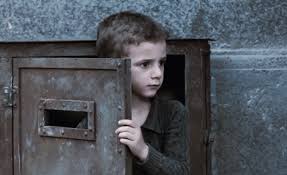
The story strains the limits of belief, as only cinema can, but teaches a lesson. Our children are ours to protect, even sometimes from the truth, not to mention things that may or may not be the truth. Likewise, there are the vulnerable within society that don’t respond well to panic. A teenage girl in Britain recently committed suicide because of the distress over Corona Virus. We all are seeing the hysteria and hoarding occurring in our grocery markets, and the sell-offs and pessimism in our stock markets. Reading into the psychology behind these behaviors, do we imagine that more suicides are not on our hopeless horizons? Possibly we could all take a lesson from the President, regardless of our love or hatred for him. He seems to know what people want, no, need to hear, Hope. He speaks of going back to work by Easter; doubtful, and as always he leaves it open ended; but in contrast to Governor Cuomo telling us we may be locked down for 9 months or more, it gives us hope… and suddenly the stock market is no longer in “bear” territory. It may be that the truth is closer to Cuomo’s augur than to Trump’s optimism, but sometimes the truth is best administered a teaspoon at a time, lest presented in one dose it overwhelms.
The opening quote from Agent K echoes the internet meme that we of advanced years have “seen the end of the world like ten times now”. There is indeed always some looming disaster on the horizon, and when there is none, we invent them. Our literature and cinema are replete with doomsday themes, Armageddon seems to fascinate us. Always hovering in our collective consciousness is the awareness that we are fragile creatures on a fragile planet, often at the mercy of relentless and terrible forces that seem perpetually intent on finding a way to destroy us. In each of us individually, despite our best attempts to turn a blind eye, is the nagging awareness of our own mortality. For most of us, we are able to avert our gaze to the business of day to day life, and divert a morbid contemplation of death and dying to fictional displacements; but occasionally situations arise, like this virus, that bring the focus back to just how vulnerable we all are. As Tolkien penned, “It’s a dangerous business, Frodo, going out your door…”. Of course, in a nation where someone dies every 12 seconds, the number of deaths from Covid 19, while grievous, are dwarfed by the ongoing number of equally grievous deaths from other causes. Certainly, we do what we can to avoid all causes of death, but we do not exist in perpetual panic. Imagine if we became this panicked over heart disease, from which one person dies every 37 seconds in this country. Government enforced dietary restrictions, mandated exercise regimens, government funded public gyms with required memberships, social ostracizing over obesity, hoarding of heart healthy food… But no, our response is more measured; we leave that to the individual and their families, we provide medical assistance and education services to help people make wise choices. Ah, I can hear you now, “But the virus is different, others’ poor choices can affect my life with this!” But that argument only holds water to a certain extent. Have we not all made choices? There have been pandemics throughout history, and we know that the answer to pandemic is isolation. But now we call on all society to turn their world upside down because we are unprepared for, or unwilling to endure that isolation? I, for my part, live by myself in a rural area. I have sufficient food and money to last months. I have an ample supply of toilet paper, purchased before the crisis, and a gun to protect it. All choices I have made, and I could easily isolate with almost no chance of infection until this all blows over. In the security of my sanctuary, I could smugly ridicule those who have not chosen so wisely as I. I might resentfully chide those willing to take more risk than I in their trekking weekly to the market, with their infested re-useable cloth bags, in a quest for the toilet paper and lysol that they so thoughtlessly neglected to procure before this all happened. I might post to FaceBook diatribes about other’s irresponsibility in standing within six feet of each other, when I stay six hundred feet from anyone; that they believe that some flimsy paper mask or bandana will keep them as safe as my bolted door. But no, we all need to make decisions based on today’s realities, and while others’ decisions might to a degree affect the decisions we need to make, we are ultimately most subject to the decisions we ourselves have made, and continue to make. We weigh things in the balance, and that balance varies from person to person. I won’t be self isolating, though I clearly could, but I am nevertheless trying to be sensible… or at least what I consider to be sensible. Others I’ve seen are a bit more “risk tolerant” than I, and a few seem simply oblivious. I could be critical, but some might criticize me, and others might criticize them… what is the point? It changes nothing. The liberal big government mindset is always the same, it assumes that once authority tells people what they should do, they will do it. But so much of the human condition is predicated on the fact that people often do what they should not, even when they know they should not; how much moreso when they’ve only been told that they should not, and don’t necessarily agree. This is why strong central governments always require a boot on the neck of their citizens.
With each disaster humanity faces, the same actors always appear. It begins with the doomsday prophets who never seem to underestimate a catastrophe, or the horrible consequences of failing to act with immediacy and extremity. These are the ratings driven media, the FaceBook hysterics, and the politicians unwilling to let a good crisis go to waste. No response seems excessive to them, and their mantra is “We hope we’re wrong, but better safe than sorry!” At what cost? Then there are the frightened lambs, they hear the prophets and imagine even worse. These are the hoarders, the hiders; driven by fear, they expect the worse and torture themselves with every word they hear. There are then, at the opposite pole, the oblivious optimists, those who ignore almost everything they hear, preferring to delude themselves than to interrupt their slumber with responding to a threat. These are often young people suffering from senses of invincibility that their few years have not yet served to dispel; but there are older folk too, who mistake stupidity for courage, bravado for bravery. Finally, come the rescuers… and they often appear at the last. At least because they are less noisy, we don’t notice them until the last. These are they who calmly maintain their senses, and courageously go about the business of resolving the crisis. They are the doctors and nurses, the philanthropic businessmen, the truth talkers. These are they whom Kipling references, “If you can keep your head when all about you are losing theirs…”; the people you need most in any crisis, without the which, we really would be in a death spiral. The best of these are often battle tested, they have seen dark nights, but also fresh sunrises. They know that crisis is neither the time for panic, nor for unrealistic calm. There has ever been such things, plagues, famines, holocausts… and always the fear that the world will never be the same… but morning comes, the earth moves on, essentially as it did before, generations pass, the land heals. Most see a divine Providence insuring that it does, finding ways always to forestall our doom, keeping this fragile planet buffeted as it is, whole and unbroken, as if It is Its divine intent that we continue. There may come a day when that Providence steps aside, or for the faithless, when the numbers just catch up with us. When that happens, it won’t much matter what we’re doing. Yet for me, I’d rather be found comforting others, dressing their wounds, fellowshipping with friends, hugging my family… than at Walmart with a shopping cart of toilet paper.


On target !
LikeLike
Kevin, that was very well written!
LikeLike